The Road to a Stronger Game Industry

Almost ten years ago the project Qvarken Game Industry kicked off with a clear goal: supporting small game companies in the Kvarken region. Today, its impact is clear in the form of networks, new collaborations, and an upcoming education program that will give the industry a boost.
First steps
Project Manager Tobias Björkskog has a long history with games. After returning to his hometown of Pietarsaari following a career as a game programming teacher in Sweden, he brought his expertise to Novia University of Applied Sciences’ Faculty of Arts and Culture, where he began working with research, development, and innovation.
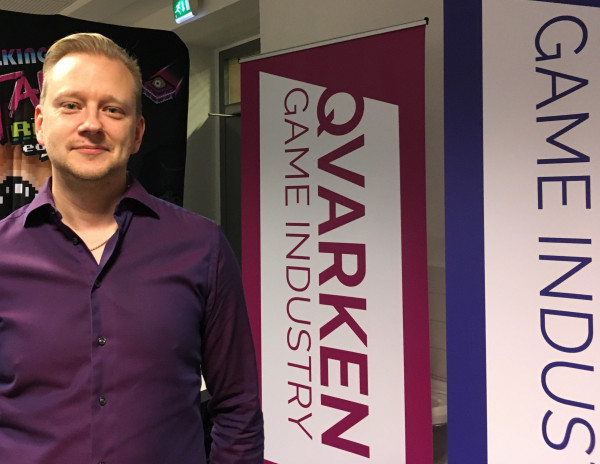
Tobias Björkskog.
Between 2017 and 2021, the Qvarken Game Industry project was carried out with the aim of increasing the number of game companies in Ostrobothnia and Westrobothnia, strengthening their skills, and fostering closer collaboration within the Kvarken region’s game industry.
To recruit participants, the project team attended industry events and identified small, emerging game companies. The project offered masterclasses, workshops, and opportunities to attend conventions such as Splash and GamesCon for networking and knowledge exchange.
The impact that is visible today
Thanks to Qvarken Game Industry, several game companies managed to stay in business and are still active today.
One of them is September Games, run by Henrik Hermans. He founded his company in 2019 and came into contact with the project through advisory services for new businesses. Henrik emphasizes that the networking part of the project was essential and helped him with others in the industry.
“Before the Qvarken project I was sitting at home making my games without even knowing how many other game developers there were in the region.
Creating networks and bringing together game developers in the region was one of the project’s main goals – something Henrik has truly experienced.
”Some of the other local game developers I met there are now some of my best friends”, he says, “since 2022 I’ve shared an office with several of them, and my work has been enriched by their ideas and collaboration. This September, I moved into a new office in central Vaasa with Mikael Matveinen and Ville Herranen, whom I met through the project.”
What’s next for the game industry in the region?
So how can one feel the project’s impact in the region nearly a decade later? Tobias explains that the initiative not only helped companies survive but also paved the way for new projects. One of these, X Border Support4Games, led to the creation of the Bothnia Game Devs network, where developers meet regularly, share experiences, and support each other.
Another major milestone is the degree programme Bachelor of Culture and Arts, Game Arts, launching in autumn 2026. Tobias believes it will give the regional game industry a significant boost. Today, many developers are self-taught, but with this program, the hope is to provide internships, new talent, and open doors for more game companies to emerge.
“If you want a game industry, you need education too,” says Tobias. “Give it a few years for the students to enter the job market, and we’ll see the results.”
Our RDI Spotlight highlights the lasting impact of Novia University of Applied Sciences' research, development, and innovation (RDI) efforts on the world around us.